
Nervous System Regulation Is Not the Same as Being Calm

Updated: Aug 28
What the wellness trend gets right - and what it tends to flatten
Susana Padilla, CHt | Hypnosis Haven
“Regulate your nervous system” has become one of the most repeated instructions in wellness.
It appears under videos about breathing, cold plunges, sleep, trauma, vagus-nerve exercises, stretching, magnesium, walking, journaling, humming, infrared saunas, and probably seventeen products someone would be delighted to sell you before breakfast.
The popularity is not entirely misplaced. People are exhausted. Many are overstimulated, underslept, chronically braced, and tired of treating every problem as a failure of discipline.
But the phrase is becoming so broad that it risks losing its meaning.
Regulation is not the same as being calm.

A Healthy Nervous System Is Supposed to Change
If you are about to give a speech, your heart may beat faster.
If your child runs toward the road, your body should mobilize quickly.
If someone you love surprises you, you may gasp.
If you exercise, your cardiovascular system responds.
If you are grieving, your body may feel heavy.
If you are genuinely threatened, calm is not the appropriate goal.
A regulated system is not a system that never activates.
It is a system with flexibility.
In physiology, researchers often look at stress response and recovery rather than treating all activation as pathology. Recent work on autonomic recovery and heart-rate variability emphasizes the importance of adapting to stress and then recovering afterward. Autonomic flexibility refers to the capacity to shift in ways that are appropriate to changing internal and external demands.
So the question is not, “How do I stay parasympathetic all day?” Human beings are not houseplants.
A more useful question is: “Can my system mobilize when needed, and can it find its way back when the demand is over?”
Why the Term Is Everywhere Right Now
The wellness world has clearly shifted toward the language of recovery, regulation, resilience, and sustainability. In 2026, mainstream wellness coverage has described nervous-system regulation as one of the year’s dominant conversations, reflecting a broader move away from constant optimization and toward the question of how people recover from chronic stress.
That cultural shift makes sense.
For years, much of wellness sounded like another job: wake earlier, track more, optimize everything, hit the metric, buy the device, become the best possible version of yourself before lunch.
Eventually even self-care can become another performance review.
The appeal of nervous-system language is that it gives people another explanation for why effort is not always enough. Sometimes the problem is not laziness or lack of insight. Sometimes the body has learned a response so thoroughly that it arrives before conscious reasoning.

Activation Is Not Failure
One of the unintended consequences of regulation culture is that people can begin monitoring themselves for evidence of “dysregulation” all day.
My heart is beating fast. I’m dysregulated.
I got angry. I’m dysregulated.
I couldn’t sleep. I’m dysregulated.
I don’t feel peaceful.
Something is wrong with my nervous system.
That can become its own form of hypervigilance. Bodies move through states. Activation, irritation, fatigue, excitement, concentration, grief, sexual arousal, exercise, hunger, and ordinary stress all involve shifts in physiology.
The goal is not emotional anesthesia. It is not to become so “regulated” that nothing touches you. Regulation should increase your capacity to live, not your fear of having a reaction.
Recovery Matters More Than Perfection

There is useful science behind practices that support stress recovery. Slow breathing and heart-rate-variability biofeedback, for example, have been studied for their effects on parasympathetic activity and autonomic flexibility. Research on recovery from psychological stress also examines how efficiently the system returns toward baseline after a stressor.
But none of this requires turning your life into a laboratory.
Sometimes regulation looks remarkably unglamorous:
• Going to bed.
• Eating before you become shaky and irritable.
• Leaving the argument instead of winning it.
• Taking a walk.
• Letting an unanswered email remain unanswered until morning.
• Breathing more slowly for a few minutes.
• Reducing stimulation.
• Laughing.
• Crying.
• Allowing the body to complete a stress response instead of criticizing it for having one.
Where Hypnosis Fits Into This Conversation
Hypnosis interests me here because so many of the responses people want to change are automatic.
They know the elevator is safe, but the body panics.
They know the presentation is not life-threatening, but the heart pounds.
They know the sound is small, but the reaction is enormous.
They know they want to sleep, but bedtime itself has become a cue for wakefulness.
They know the medical appointment is routine, but the waiting room already feels like bad news.
These are not necessarily failures of information. The conscious mind may already possess excellent information.
The work is often helping the automatic response learn something new.
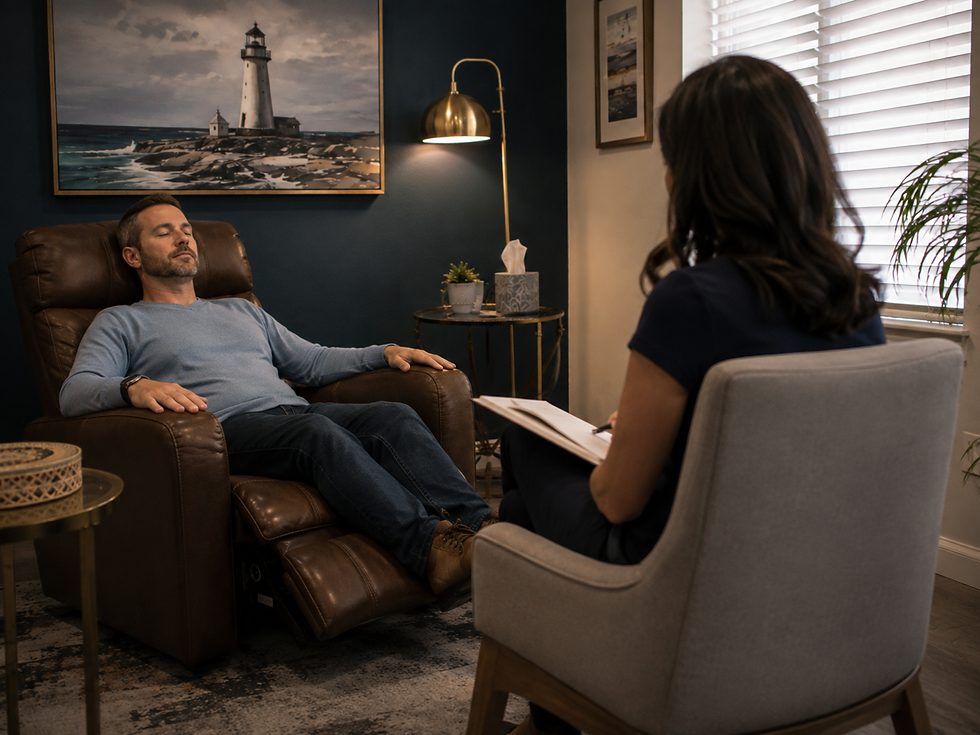
Hypnosis uses focused attention, imagery, suggestion, expectation, and rehearsal. In practice, that can mean helping a person imagine the trigger while paired with a different bodily response, strengthening an internal cue for steadiness, changing the meaning attached to a sensation, or rehearsing recovery after activation rather than demanding that activation never occur.
Calm Is a State. Regulation Is a Capacity.
That distinction matters.
Calm is one state among many.
Regulation is the ability to move among states without becoming trapped in one of them.
A person can be regulated and angry.
Regulated and grieving.
Regulated and excited.
Regulated and nervous before something important.
The nervousness may rise, do its job, and recede.
That is a very different goal from trying to become permanently unbothered.
Be Careful With the Language of “Safety”
Another phrase that circulates constantly is “teach your nervous system that you are safe.” Sometimes that is useful. Sometimes it is not accurate.
There are situations in which a person is not safe. There are relationships that require boundaries. Workplaces that require change. Medical symptoms that require evaluation. Environments where a body’s alarm is not an inconvenient glitch but information.
Regulation should not become a method of adapting indefinitely to circumstances that discernment is asking us to address.
A calmer nervous system can help us think more clearly. It should not be used to make ourselves tolerate what needs action.
A More Useful Definition
When I use the phrase nervous-system regulation, I am not talking about maintaining perpetual serenity.
I mean the capacity to notice activation, respond proportionately, recover when the demand has passed, and remain connected enough to ourselves to make a choice.
Sometimes that choice is to soothe.
Sometimes it is to speak.
Sometimes it is to rest.
Sometimes it is to leave.
Sometimes it is to get medical or psychological help.
And sometimes it is simply to allow a perfectly normal human reaction to move through without turning it into another diagnosis of what is wrong with us.
The goal is not to become calm enough to stop being human.
The goal is to become flexible enough to remain ourselves while life keeps happening.
Sources & Editorial Notes
These sources support the medical, psychological, and trend context used in the article. Hypnosis is presented as complementary support and not as a substitute for medical or mental-health diagnosis or treatment.
Forbes. Why Nervous System Regulation Has Become Wellness’s Latest Obsession. https://www.forbes.com/sites/meggenharris/2026/06/21/why-nervous-system-regulation-hasbecome-wellnesss-latest-obsession/
PubMed. Breathe better, live better: the science of slow breathing and heart rate variability. https://pubmed.ncbi.nlm.nih.gov/40252198/
PubMed. Cardiac vagal recovery following acute psychological stress in human adults: A scoping review. https://pubmed.ncbi.nlm.nih.gov/40571137/
Website disclaimer: This article is educational and is not medical advice. Persistent, severe, or concerning symptoms should be evaluated by an appropriately qualified healthcare professional. Hypnosis is complementary support; individual experiences vary.
The goal is not to become calm enough to stop being human. The goal is to become flexible enough to remain yourself while life keeps happening.
When Your Body Keeps Reacting Before You Can Think
If you understand what is happening intellectually but your body still moves first — through anxiety, tension, panic, insomnia, irritability, overwhelm, or anticipatory stress — hypnosis may help you work with those automatic patterns differently.
The goal is not to make you permanently calm. It is to help your nervous system become more flexible: able to respond, recover, and return without every reaction taking over the rest of the day.
Sessions are individualized and can focus on the specific situations, sensations, and patterns that continue to feel automatic.
A brief confidential conversation can help determine whether hypnosis may be an appropriate fit for what you are experiencing.



Comments